
Systems capability
Mortar Optical Heading & Reference Sighting System
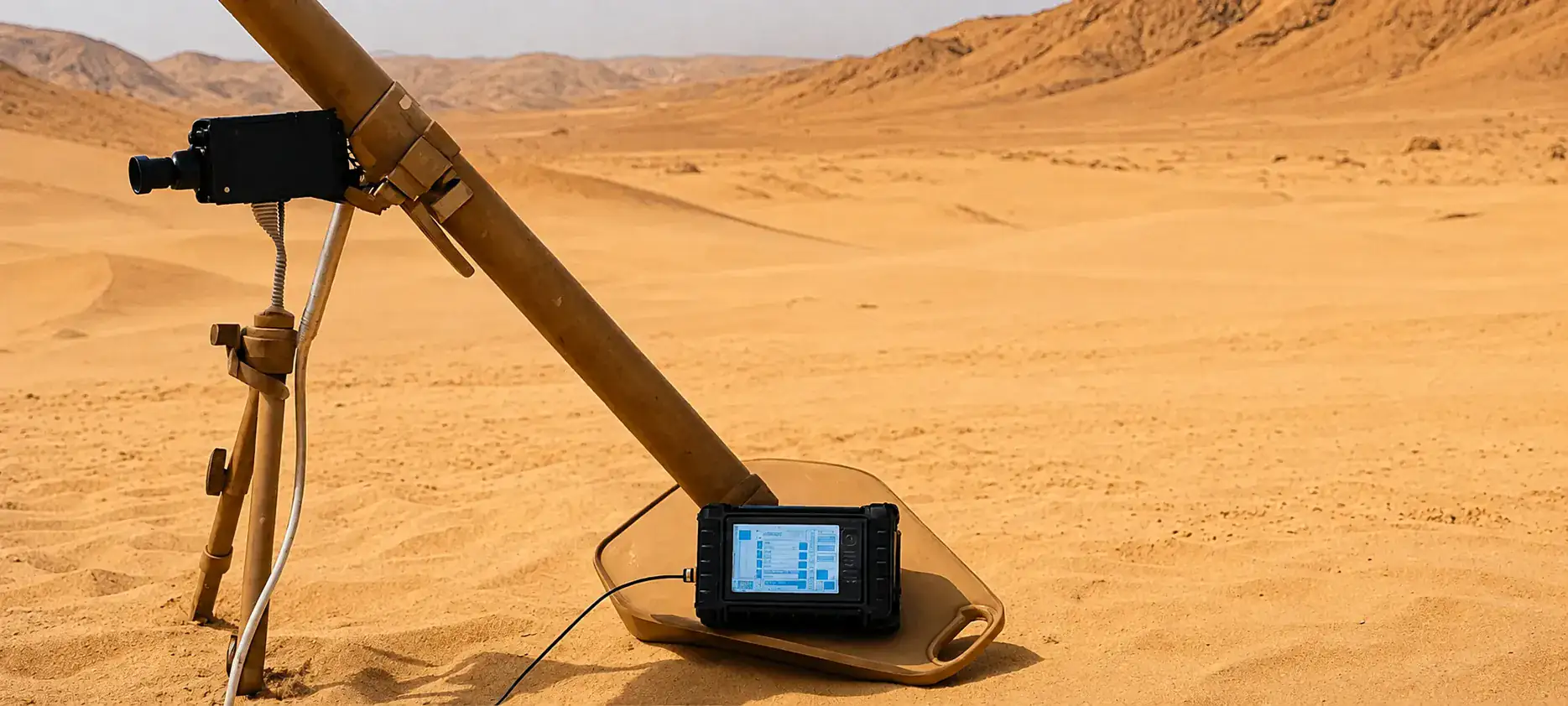
The Mortar Optical Heading & Reference Sighting System from African Defence Systems provides digital positioning, heading and laying guidance for conventional mortar applications, combining inertial sensing, optical referencing and a handheld display for day and night operation.
The system
What is the Mortar Optical Heading & Reference Sighting System?
The ADS Mortar Optical Heading & Reference Sighting System is a digital orientation and sighting solution developed for conventional mortar systems. The unit uses inertial sensors to establish heading and orientation, combined with optical referencing to maintain that reference during operation. A handheld display presents guidance to the operator and can be integrated with the wider ADS mortar fire-control environment.
It is designed as a practical digital modernisation path — introducing modern sensing and display technology without requiring replacement of the complete weapon platform. Depending on configuration, the system provides:
- Digital heading and orientation
- Inertial sensing
- Optical reference
- Infrared day/night capability
- Handheld laying guidance
- Ballistic calculation (configurable)
- Interface with wider fire control
- Fits the mortar sight mount
At a glance
Heading & reference at a glance.
- Product type
- Digital mortar heading and reference sighting system
- Application
- Conventional mortar systems
- Primary function
- Heading, orientation and laying guidance
- Initial orientation
- MEMS gyro
- Inertial sensors
- Gyroscopes, accelerometers, magnetometers
- Reference method
- Optical / visible external reference
- Drift management
- Optical referencing complements inertial sensing
- Day & night
- Infrared camera
- Operator interface
- Handheld display / tablet
- Fire-control interface
- BMFCS / AS4000-compatible architecture
- Installation
- Mortar sight-mount environment
- Provider
- African Defence Systems
Digital orientation
Replacing mechanical sighting with digital heading.
Conventional mortar systems can continue to provide useful operational capability long after their original sighting and orientation methods have become dated. The ADS system replaces or supplements legacy mechanical sighting with a digital heading and reference capability, retaining the existing mortar platform where appropriate. The result is a focused modernisation solution rather than a requirement to replace the complete weapon.
Heading and orientation are derived from an integrated inertial sensor suite — gyroscopes, accelerometers and magnetometers — that together form the digital sensing foundation of the system. A MEMS gyro provides the initial orientation reference; the system then combines inertial information with optical referencing to maintain orientation during operation.
Detailed alignment procedures and operating sequences remain within controlled technical documentation rather than the public site.
Reference capability
Optical referencing, drift management and day/night operation.
Optical reference for orientation maintenance
A key differentiator of the ADS system is the use of an optical reference alongside inertial sensors. A camera compares the current visual reference with a previously established pose or external visible reference point, allowing the system to maintain heading reference and counter the drift that develops when relying on inertial sensing alone.
Countering inertial drift
Inertial systems accumulate drift over time. The Mortar Optical Heading & Reference Sighting System addresses this by using visual reference information to re-establish orientation — the camera relates the current view to an established visual reference so the inertial and optical functions work together as part of the same architecture.
Day and night capability
An infrared camera enables the optical reference capability to remain effective in different lighting conditions, extending useful operation beyond daylight-only environments. Actual environmental performance is confirmed according to the customer requirement.
Operator interface
Handheld display, laying guidance and ballistics.
A handheld display — identified in the ADS overview as a handheld tablet — forms part of the system architecture. It presents digital laying guidance derived from the heading and reference system, keeping the operator interface compact and accessible within a conventional mortar environment.
The information flow is straightforward: orientation sensors › optical reference › system processing › handheld guidance. Detailed laying procedures are intentionally retained within authorised user documentation rather than the public website.
ADS documentation states that the handheld display can also calculate ballistic solutions, allowing the heading and reference capability to be combined with digital ballistic functionality where that capability forms part of the selected configuration. The exact ballistic implementation depends on the mortar system, ballistic data and customer configuration — and can be considered alongside the wider ADS Fire Control Systems offering.
Integration & installation
Fire-control integration and platform fit.
The Mortar Optical Heading & Reference Sighting System can operate as part of a broader digital mortar fire-control environment. The ADS overview identifies an interface between the Mortar Optical Heading and Reference Unit and the Battlefield Management and Fire Control System, creating a potential digital relationship between mortar orientation and the wider fire-control architecture. The final level of integration depends on the system configuration and customer requirement.
The system is identified as fitting on the mortar sight mount — an important modernisation characteristic because it allows the digital heading and reference capability to be incorporated into an existing conventional mortar environment. The precise mechanical interface is defined according to the specific mortar platform.
Where required by the customer programme, this capability can be considered alongside other ADS solution families:
- Fire Control Systems — AS4000 Battlefield Management and Fire Control architecture for broader digital fire-control and battlefield-management capability.
- Scorpion Automated Mortar System — more highly integrated vehicle-mounted mortar and fire-control architecture.
- Communication Systems — provision and integration of communications equipment where communications form part of the wider mortar system requirement.
- Drone Integration Systems — drone-control and battlefield-system integration for programmes requiring unmanned observation capability.
Programme fit
Designed around the existing mortar.
The ADS overview positions the Mortar Optical Heading and Reference Unit as a lower-cost solution designed to provide the necessary accuracy. That makes it relevant to modernisation programmes where the requirement is to improve mortar orientation without introducing an unnecessarily complex replacement architecture.
The strength of the system lies in combining sensing methods rather than relying on one source of orientation information: gyroscopes provide inertial angular-motion information, accelerometers contribute to inertial positioning and attitude, magnetometers add heading-related information, an optical camera provides an external visual reference, and an infrared camera extends that reference into day and night operation.
The final configuration is defined around the customer’s specific mortar platform, sight-mount arrangement, required heading and orientation capability, day/night requirements, handheld-display requirements, existing fire-control equipment, required BMFCS integration and power/communications environment.
Integration & disclosure
Technical detail, shared responsibly.
The public site describes the Mortar Optical Heading & Reference Sighting System at capability level. Detailed accuracy data, alignment procedures, operating sequences, ballistic information and platform-specific interfaces are provided through controlled technical engagement with authorised customers and programme partners.
Frequently asked
Mortar sighting questions.
What is the ADS Mortar Optical Heading & Reference Sighting System?
It is a digital mortar orientation and sighting system from African Defence Systems that combines inertial sensors, optical referencing and a handheld display to provide heading, reference and laying guidance for conventional mortar applications.
What does the system replace?
ADS describes the system as an alternative to legacy mechanical mortar sights. It provides a digital heading and reference capability while allowing the existing mortar platform to be retained where appropriate.
What sensors does the system use?
ADS documentation identifies gyroscopes, accelerometers and magnetometers within the system architecture. The newer ADS overview also identifies a MEMS gyro for initial orientation.
How does the system maintain its orientation?
The system combines inertial information with an optical visual reference. A camera references the current view against an established pose or visible reference point to help maintain orientation and counter inertial drift.
Why does the system use an optical reference?
The optical reference provides an external reference that complements the inertial sensors. This allows the system to maintain orientation rather than relying only on inertial data over time.
Can the system operate at night?
Yes. ADS documentation identifies an infrared camera that enables effective day and night operation.
Does the system use a handheld display?
Yes. A handheld display or tablet forms part of the architecture and provides digital laying guidance to the operator.
Can the handheld system calculate ballistics?
ADS documentation states that the handheld display can also calculate ballistic solutions. The final ballistic capability depends on the configured system and associated ballistic data.
Can the system integrate with AS4000 fire control?
Yes. ADS documentation identifies an interface to the Battlefield Management and Fire Control System, allowing the heading and reference capability to form part of a wider digital mortar environment.
Does the system require a new mortar platform?
Not necessarily. The product is positioned as a modernisation capability for conventional mortar systems and is designed to fit the mortar sight-mount environment.
Is the system only useful as part of a complete fire-control installation?
No. It can be considered as a focused mortar heading and reference capability or integrated with wider ADS fire-control functions according to the customer requirement.