Systems capability
Communication Systems
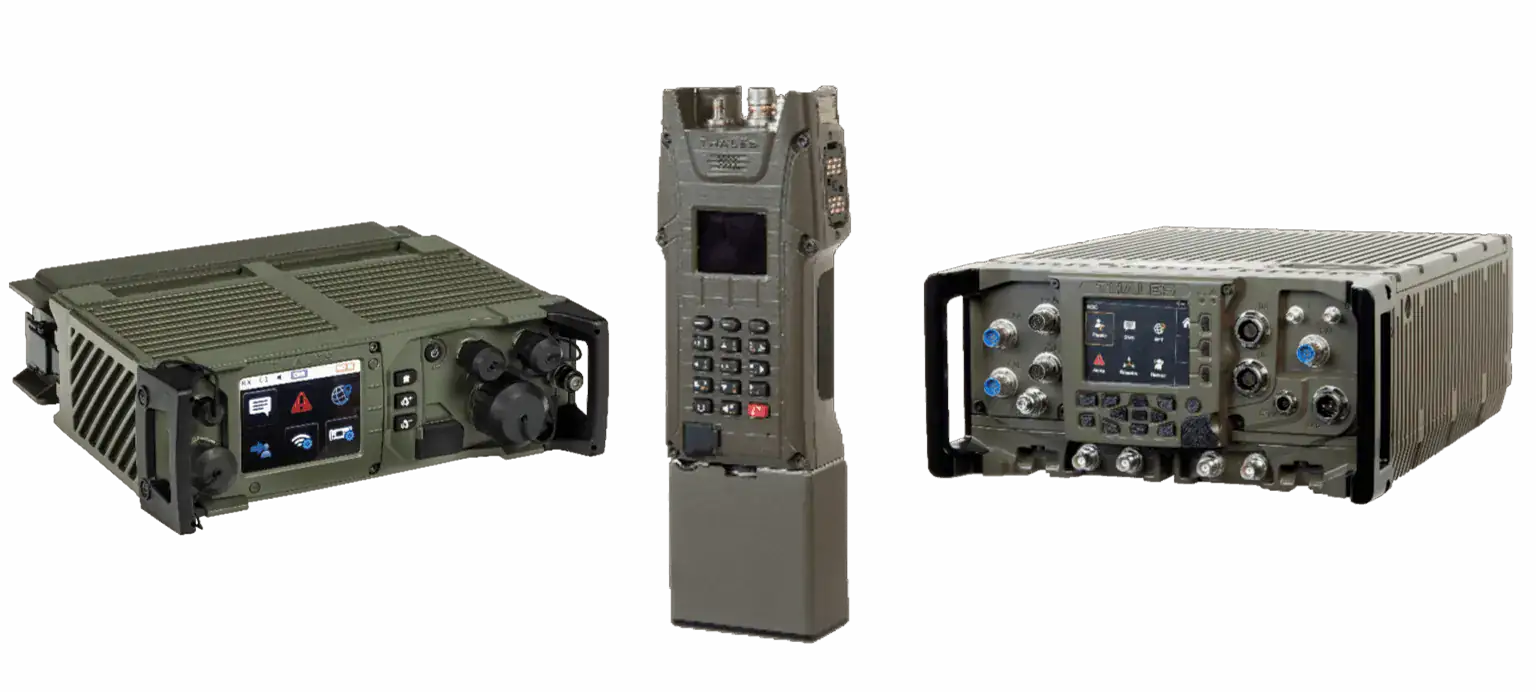
African Defence Systems supplies and integrates military communication systems for vehicle-mounted, command-post and man-portable applications — VHF, HF and UHF tactical radios, intercom systems, personnel radio systems, data-communication equipment and the interfaces required to connect communications with wider defence-system architectures.
The capability
What communication systems does ADS provide?
ADS provides communications equipment and systems-integration capability for defence applications where voice and data communications must operate as part of a wider platform or mission system. The communications requirement is defined around the user’s operational environment, existing equipment and the other systems with which the communications equipment must interface.
Depending on the programme, the capability can include:
- VHF tactical radios
- HF tactical radios
- UHF tactical radios
- Vehicle-mounted communications
- Command-post communications
- Man-portable communications
- Personnel radio systems
- Intercom systems
- Data-communication equipment
- Communication interfaces
- Data and voice integration
- Customer-furnished radio integration
At a glance
Communications at a glance.
- Capability type
- Defence communications supply and systems integration
- Tactical radio bands
- VHF, HF and UHF
- Mounted systems
- Yes
- Command-post integration
- Yes
- Man-portable systems
- Yes
- Personnel radios
- Yes
- Intercom systems
- Yes
- Data communications
- Equipment and interface integration
- Voice communications
- Integrated where configured
- Existing equipment
- Tactical, legacy and compatible customer-furnished radios
- Platform integration
- Vehicle and wider system architecture
- ADS integration
- Fire Control, Scorpion, Drone and Observer environments
- Provider
- African Defence Systems
Tactical radio
Tactical radio systems: VHF, HF and UHF.
Tactical radios form a core part of the ADS communication capability. ADS source documentation specifically identifies VHF, HF and UHF tactical radio systems within its vehicle-based combat-system integration offering. Radio selection and integration are determined according to the programme requirement rather than being restricted to one universal radio configuration — allowing ADS to treat the communication environment as part of the complete system architecture.
VHF
VHF tactical radio capability can form part of mounted and field communications architectures. ADS product material demonstrates the integration of VHF Combat Net Radios into wider vehicle and fire-control systems, together with the required computing, power and communications interfaces. Compatible customer-furnished VHF equipment can also be evaluated for integration.
HF
HF tactical radios are included within the ADS communication-system capability. HF equipment can be incorporated where it forms part of the approved customer communication architecture. The final installation depends on the selected radio, platform, power architecture, antenna requirement and other system interfaces.
UHF
ADS also identifies UHF tactical radios as part of its communications offering. As with VHF and HF systems, the integration requirement is defined around the customer’s selected equipment and wider defence-system architecture, enabling the communications capability to be configured around different operational environments.
Mounted, man-portable & personnel
Mounted, command-post and man-portable communications.
Mounted communication systems
A mounted communications installation involves more than securing a radio inside a vehicle. The complete integration requirement may include radio equipment, antennas, operator interfaces, intercom systems, data interfaces, power conditioning and distribution, equipment mounting, computer and network interfaces, and integration with wider vehicle systems — engineered around the selected vehicle and operational requirement.
Command-post communications
Communications equipment can also be integrated into command-post environments. ADS fire-control and system-integration material demonstrates architectures connecting command elements with other authorised system components, designed together with computing, data interfaces, power and wider command-and-control equipment rather than as a collection of unrelated radios and computers.
Man-portable and personnel systems
ADS supplies and integrates man-portable communication equipment where mobility and individual operator use form part of the requirement, with the configuration selected around user role, mobility, existing infrastructure, power, environmental conditions and interfaces to other systems. Personnel radio systems support communication requirements at individual or small-team level, approached within the same systems-integration framework.
Intercom systems
Intercom integration is particularly relevant to vehicle platforms where crew communication must operate alongside radios and other onboard electronic systems. The installation is considered together with tactical radios, operator stations, power, vehicle electronics and wider combat-system interfaces.
Data & interfaces
Data, interfaces and power distribution.
ADS provides and integrates data-communication equipment and interfaces — an important distinction because modern defence communications extend beyond voice radio. Digital systems may require information to move between computers, radios, sensors, fire-control systems, navigation systems, command systems and other authorised subsystems. ADS can develop the interface architecture required to connect compatible elements within the wider system.
ADS product architectures repeatedly combine data and voice communications, supporting both operator voice requirements and digital information exchange within configured systems. The exact voice and data architecture depends on the selected equipment and the systems with which it must interface.
Communications integration requires the appropriate electrical and data interfaces between system elements. Depending on the programme, interface engineering can include serial communication interfaces, data interfaces, radio-data interfaces, computing interfaces, power interfaces, network equipment and communication-distribution equipment — with the detailed architecture defined during system engineering rather than published on the public website.
Some ADS system architectures incorporate dedicated Power and Communication Distribution Units, providing serial-communications interface distribution and electrical power conditioning and distribution. This helps establish a controlled relationship between radio equipment, computers, sensors and other onboard electronic systems.
Integration
Integration across ADS systems and existing equipment.
The wider AS4000 architecture is not dependent on one specific radio type. ADS documentation identifies integration with tactical and legacy radios, providing an important modernisation advantage where existing communications equipment remains suitable for continued use. Instead of requiring immediate replacement of all radio equipment, ADS can assess compatible existing systems and define the interfaces required for integration. The Scorpion product architecture, for example, identifies a standard VHF Combat Net Radio while explicitly allowing customer-furnished radios to be discussed on a case-by-case basis.
Communications form part of every major ADS system family:
- Fire Control Systems — AS4000 is designed to exchange authorised information between different system roles and supports integration with compatible tactical and legacy radios.
- Scorpion Automated Mortar System — includes VHF Combat Net Radio, data-communication equipment, Power and Communication Distribution Unit and integration with wider command-and-control architectures.
- Drone Integration Systems — drone-control software, operator equipment and communications operate together within the configured unmanned-system architecture.
- Mortar Optical Heading & Reference Sighting — observer computing and sensors are integrated alongside communications for connectivity to the wider system architecture.
Some programmes may require capabilities beyond conventional tactical voice and data radio integration. ADS system documentation identifies additional communications options within specific product architectures, including encrypted satellite communications where appropriate to the selected solution. These are defined according to the approved programme requirement and are not treated as default features of every ADS communication system.
A systems-integration approach
Communications designed around the platform and the user.
The physical platform has a major influence on communication-system design. For a vehicle-mounted installation, ADS can consider available installation space, antenna locations, existing radio equipment, power availability, crew positions, intercom requirements, operator controls, computing equipment, cable routing, data interfaces and other vehicle electronics — making communications integration a platform-engineering activity rather than simply an equipment-procurement exercise.
Man-portable and personnel communication requirements are approached differently from vehicle installations. ADS considers factors such as mobility, role, equipment already in service and the required integration with wider systems, so that communications are selected and integrated for the user’s actual operating environment.
The principal ADS differentiator is not limited to supplying radios — the broader capability lies in integrating communications into operational systems. That integration can involve equipment selection, data interfaces, power conditioning and distribution, mechanical mounting within vehicles or command posts, and software or control interfaces between communications equipment and wider ADS systems where required. The final architecture is engineered as a system rather than assembled as a collection of independent devices.
Integration & disclosure
Technical detail, shared responsibly.
The public site describes ADS communication capability at system level. Specific frequencies, waveforms, encryption, security configurations, network architecture, interoperability data, electronic-protection measures and platform-specific interfaces are handled through controlled technical engagement with authorised customers and programme partners.
Discuss this capabilityFrequently asked
Communications questions.
What communication systems does African Defence Systems provide?
ADS supplies and integrates defence communication systems including VHF, HF and UHF tactical radios, intercom systems, personnel radio systems, data-communication equipment and associated system interfaces.
Does ADS provide tactical radios?
Yes. The ADS capability overview specifically identifies VHF, HF and UHF tactical radio systems.
Does ADS provide vehicle-mounted communications?
Yes. Communications equipment can be integrated into vehicles and other suitable operational platforms as part of a wider electronic or combat-system architecture.
Does ADS provide man-portable communications?
Yes. Man-portable communications form part of the existing ADS Communication Systems capability.
Does ADS provide personnel radio systems?
Yes. Personnel radio systems are specifically listed in the ADS communications capability.
Does ADS integrate military intercom systems?
Yes. Intercom systems form part of the communication capability identified in the ADS product overview.
Can ADS integrate existing radios?
Potentially. ADS documentation identifies integration with tactical and legacy radios, and customer-furnished radio equipment can be assessed where suitable technical interfaces are available.
Does ADS support both voice and data communications?
Yes. ADS product architectures incorporate integrated data and voice communications.
Can communication systems integrate with AS4000 Fire Control?
Yes. Communications are an integral part of the AS4000 architecture, which supports compatible tactical and legacy radio integration.
Are communications integrated with the Scorpion system?
Yes. Scorpion includes a VHF Combat Net Radio, data communications and a Power and Communication Distribution Unit within its defined system architecture.
Can ADS provide communication interfaces as well as radios?
Yes. ADS capability explicitly includes the supply and integration of data-communication equipment and interfaces.
Does ADS integrate communications into command posts?
Yes. ADS system material demonstrates communications equipment integrated with command-post computing and fire-control environments.
Are satellite communications available?
ADS documentation identifies encrypted satellite communications as an option within the Scorpion architecture. Whether satellite communications form part of another programme depends on the approved system requirement.
Is ADS tied to one radio manufacturer or model?
The supplied ADS material does not define one mandatory radio family for all applications. The wider architecture supports different tactical and legacy radio environments subject to compatibility and integration requirements.
Does ADS publish radio frequencies and security specifications online?
No. Detailed frequency, security, interoperability and platform information should be handled through controlled technical engagement rather than the public website.